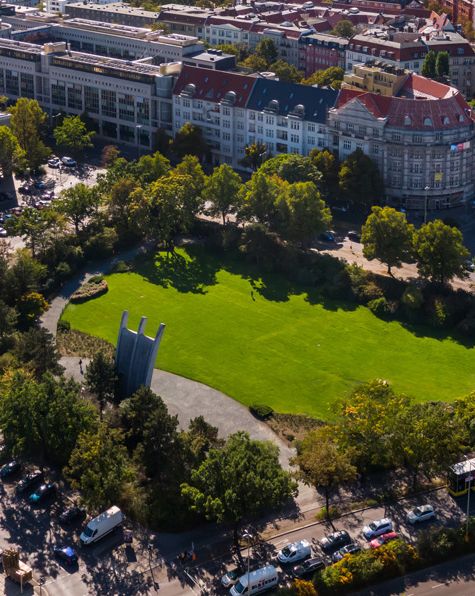
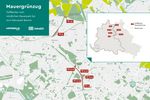
Development of subsections "Berlin Wall green corridor"
Berlin Wall green corridor - new quality of life along the former border
The development of the Wall green corridor along the historic border strip between Pankow, Mitte and Reinickendorf represents integrated urban development. It preserves history while creating new perspectives for nature, recreation and participation. Grün Berlin has been responsible for upgrading the Wall Trail since 2018 and is now supplementing the work that has already begun as part of a large-scale open space project. The aim is to transform the historically characterised areas along the former border strip into a continuous, climate-resilient green corridor - as a contribution to a better quality of life, environmental justice and communal open spaces in the growing city.
Green spaces for everyday life, remembrance and participation
The planned measures will create freely accessible, naturally designed spaces where people can exercise, relax and experience nature. Families, children and older people in particular will benefit from this. At the same time, the resulting place connects the neighbourhoods and shapes everyday urban life.
Sustainably planned - economically effective
The conversion of previously sealed or less usable areas creates robust open spaces with long-term functionality. By dismantling technical infrastructure and unsealing asphalt surfaces, the maintenance effort is reduced and the drainage systems are relieved.
More nature in the city - connecting spaces, creating habitats
The approximately 85,000 square metre wall green corridor connects differently shaped areas to form a coherent landscape band. In eleven areas, surfaces are being unsealed, invasive species removed and replaced with native trees and shrubs. New paths, meadows and woodland structures strengthen biodiversity. Replacement habitats - for example for the protected sand lizard - are also being created. Near-natural green spaces of high ecological value are being created in areas previously used for agriculture.
Adaptation to climate change with long-term effects
Permeable soils, water-storing layers and climate-adapted tree species improve the microclimate. New plantings reduce heat stress, provide shade and promote the infiltration of rainwater. This creates a resilient green infrastructure that remains usable in the long term even under changing climatic conditions - a significant contribution to urban climate adaptation.
Together with the measure to partially unseal the 4th of July square in Steglitz-Zehlendorf, the wall green corridor is part of the ‘off-track compensation and replacement measures’ in connection with the reconstruction of the Dresden railway. Both projects compensate for the impact on the natural environment caused by the construction of the new mainline railway tracks south of Südkreuz station. Grün Berlin GmbH is responsible for project management on behalf of DB InfraGO AG.

![[Translate to Englisch:]](/fileadmin/_processed_/4/5/csm_gb_projekte_urbanefreir%C3%A4ume_d%C3%B6b_galerie_1_c_atelierloidlberlin_f918a4745d.jpg "[Translate to Englisch:]")